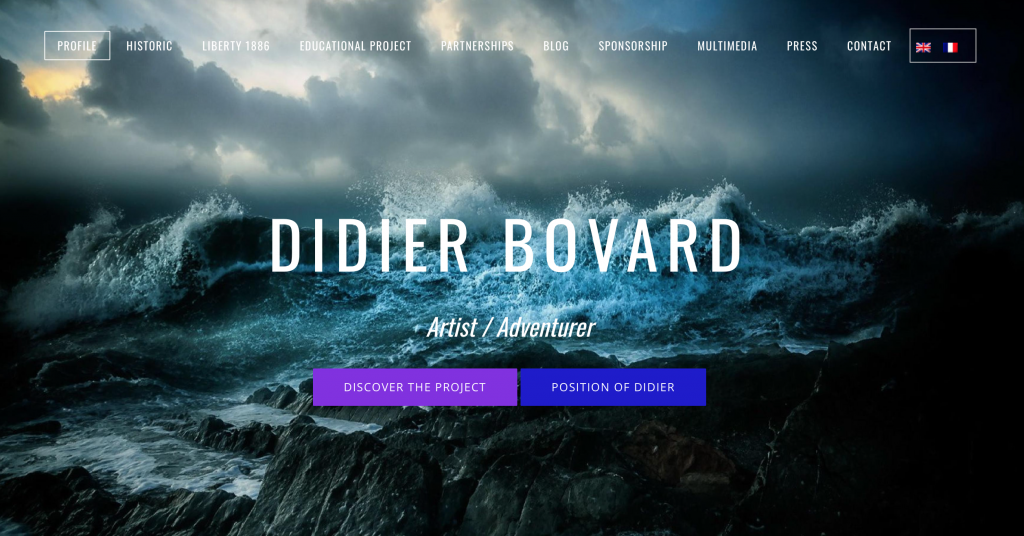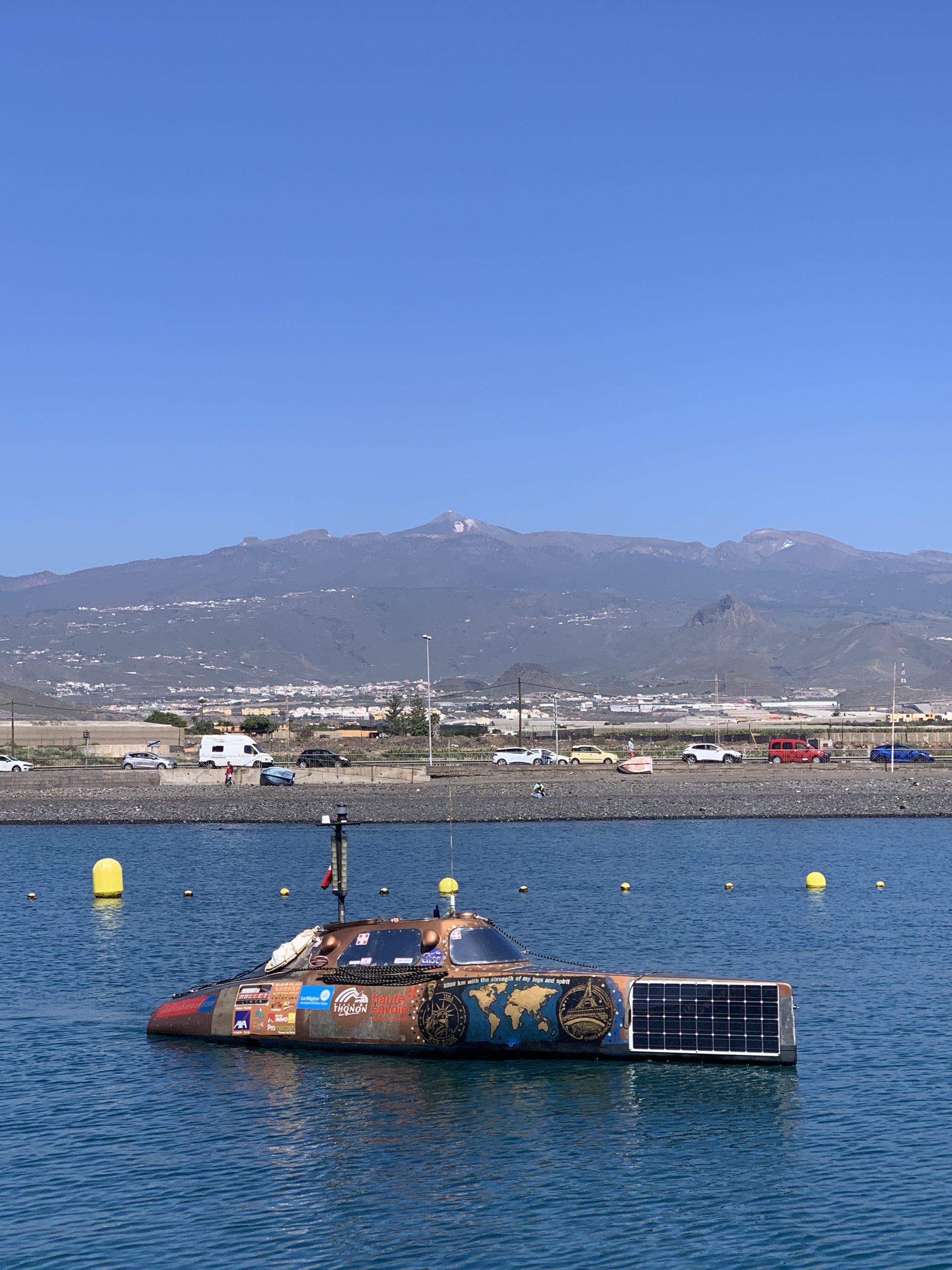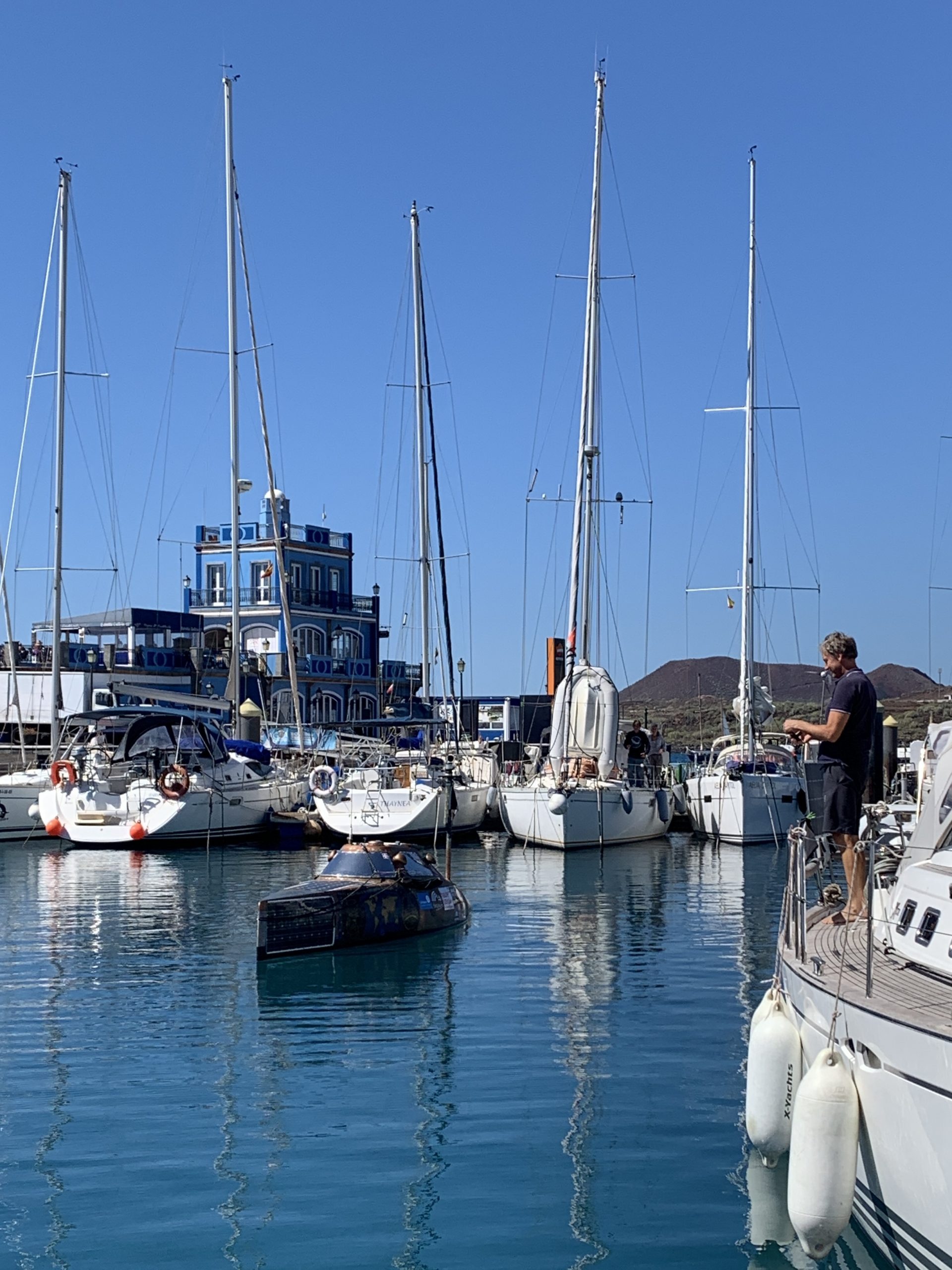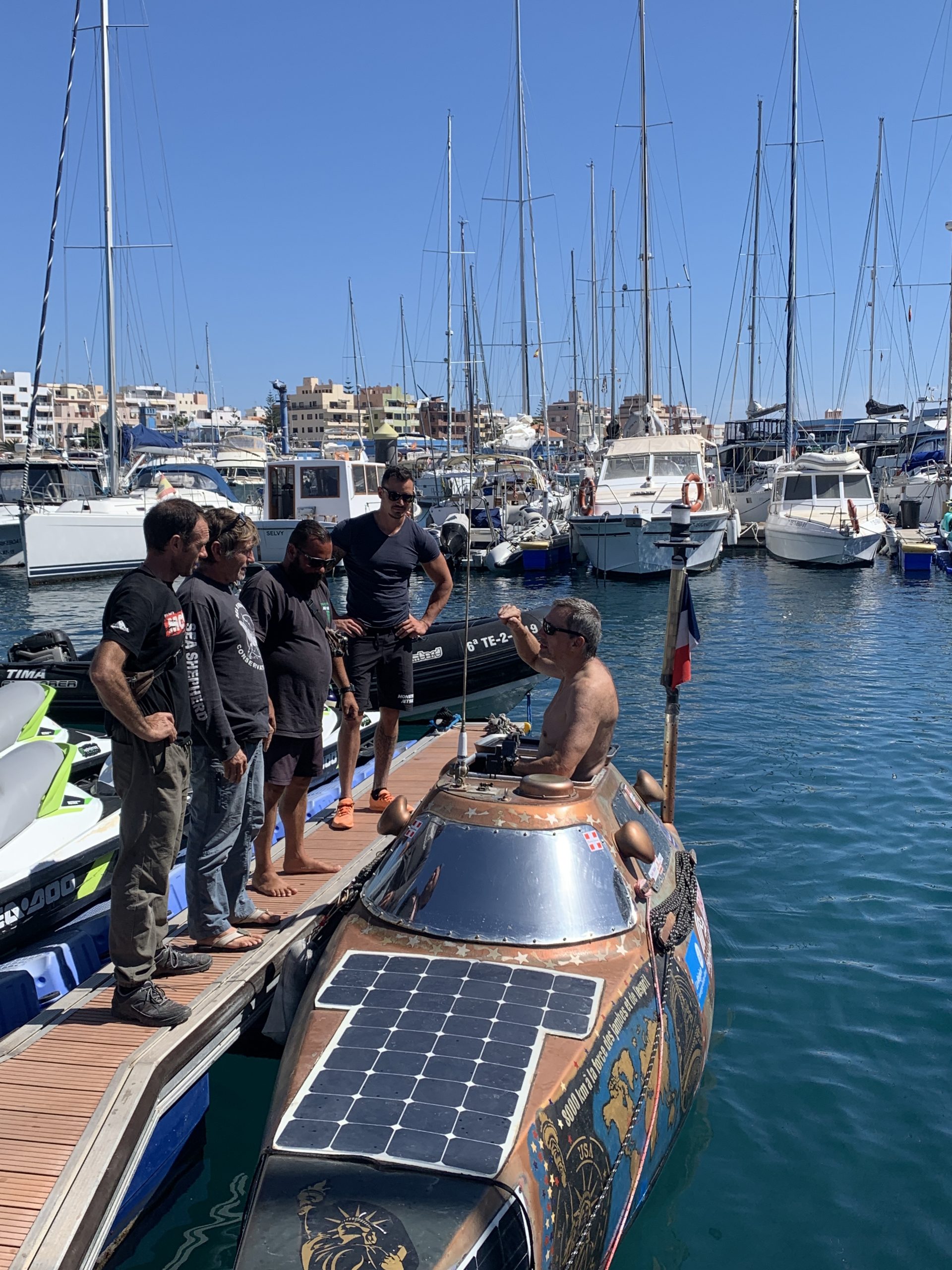
I met Didier the other day when I saw a tiny little boat at the end of our pontoon here in Santa Cruz de Tenerife. Walked over trying to eliminate my suspicion and in fact it turned opposite – my suspicion substantiated while listening to his story.
Didier had finally thrown the lines but by chance he turned up in Las Galletas, where we met him again while visiting our friend Rainer from SY Geronimo. The trip over there took him almost 24 hours and he decided for another stop in the South of Tenerife to wait for more favourable weather before heading over to New York/United States.
It is a crazy adventure and hard to imagine for an outsider what it means to cross the Atlantic Ocean in such a tiny little paddling boat.
It was getting late last night but fascination and excitement took over having some very nice QSOs around the world. A snapshot from the HAM Logbook:
2200 UTC, 7163kHz, LSB: – DL7MDB / Stefan / Madeira – DL7MEF / Franz / Augsburg – KE1Y / Rolf / New Hamshire – HK3JCL / Lothar / Colombia
2300 UTC / 14162 / USB: – V3CWB / Mike / Victoria 🇦🇺 – K2UQT / Tom / New York 🇺🇸
Although the propagation forecast was not that promising for these connections it worked surprisingly very well. On the 40m band (7MHz) I took little help of WebSDR Lisbon but the 20m band (14MHz) was extremely clear in both directions, Victoria/Australia and New York/United States. I was literally speaking sitting in the middle of Mike and Tom but that is perhaps a matter of perspective. 😅 Nevertheless I got R5 and S7 reports from both of them. R5 stands for “Readability”and means “Perfectly readable”and S7 stands for “Strength”and confirms that my signal was received “Moderately strong”.
Stefan came in with R5 and S9. Being based in Santa Cruz on Madeira, it was a nice coincident to connect the two Santa Cruz between Portugal and Spain. The connection was loud and clear at both ends, which surprised me as I am hiding behind some 900m high mountains towards the direction of Madeira. Perhaps the signal travelled the long way…who knows?!? 🤔
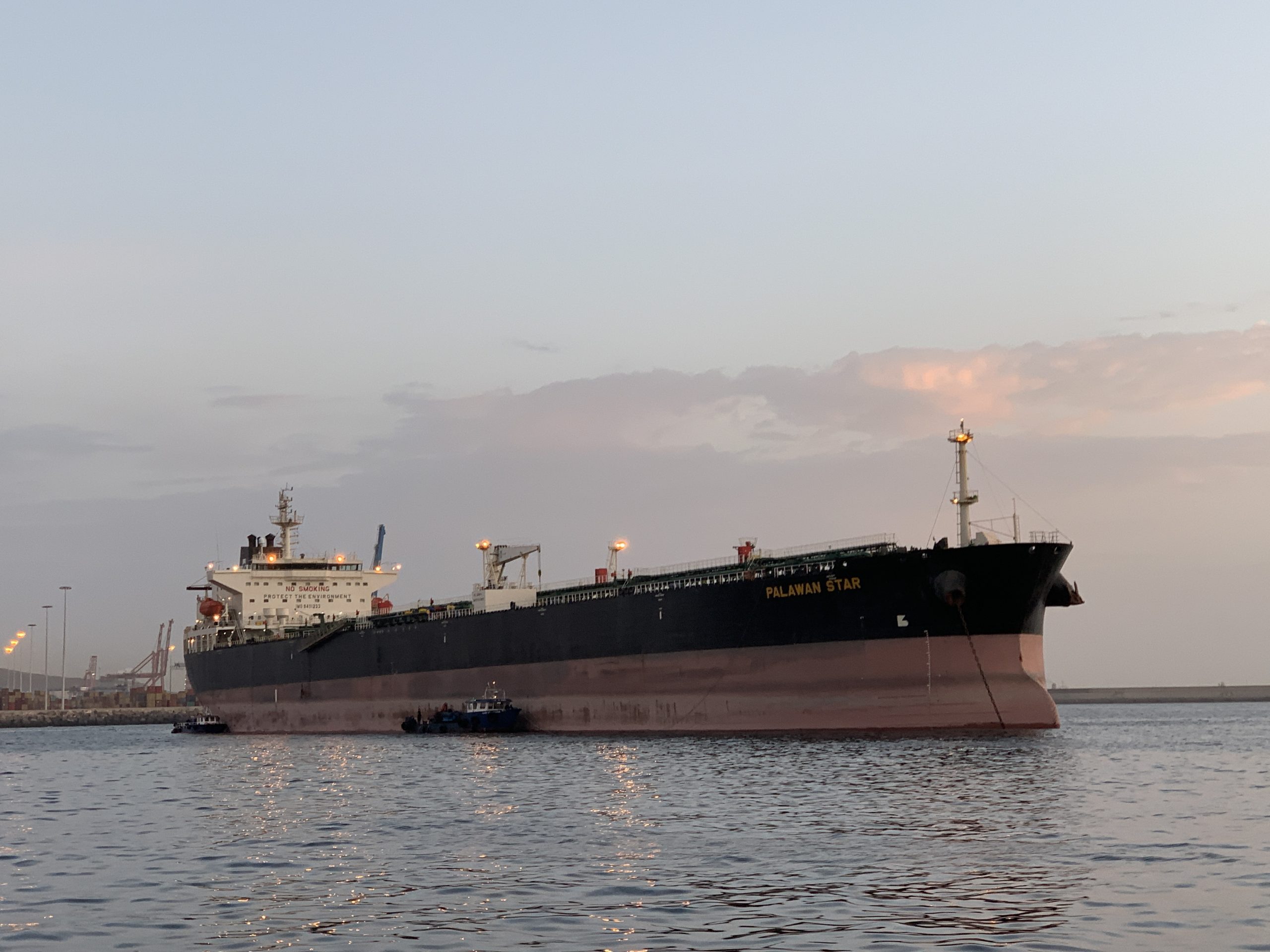
Okay-lah…to speak in the slang of my Asian friends…this photo flavours an interesting and perhaps frowning welcome here in Santa Cruz de Tenerife. Not sure how google is going to translate that sentence. You find out. 😅
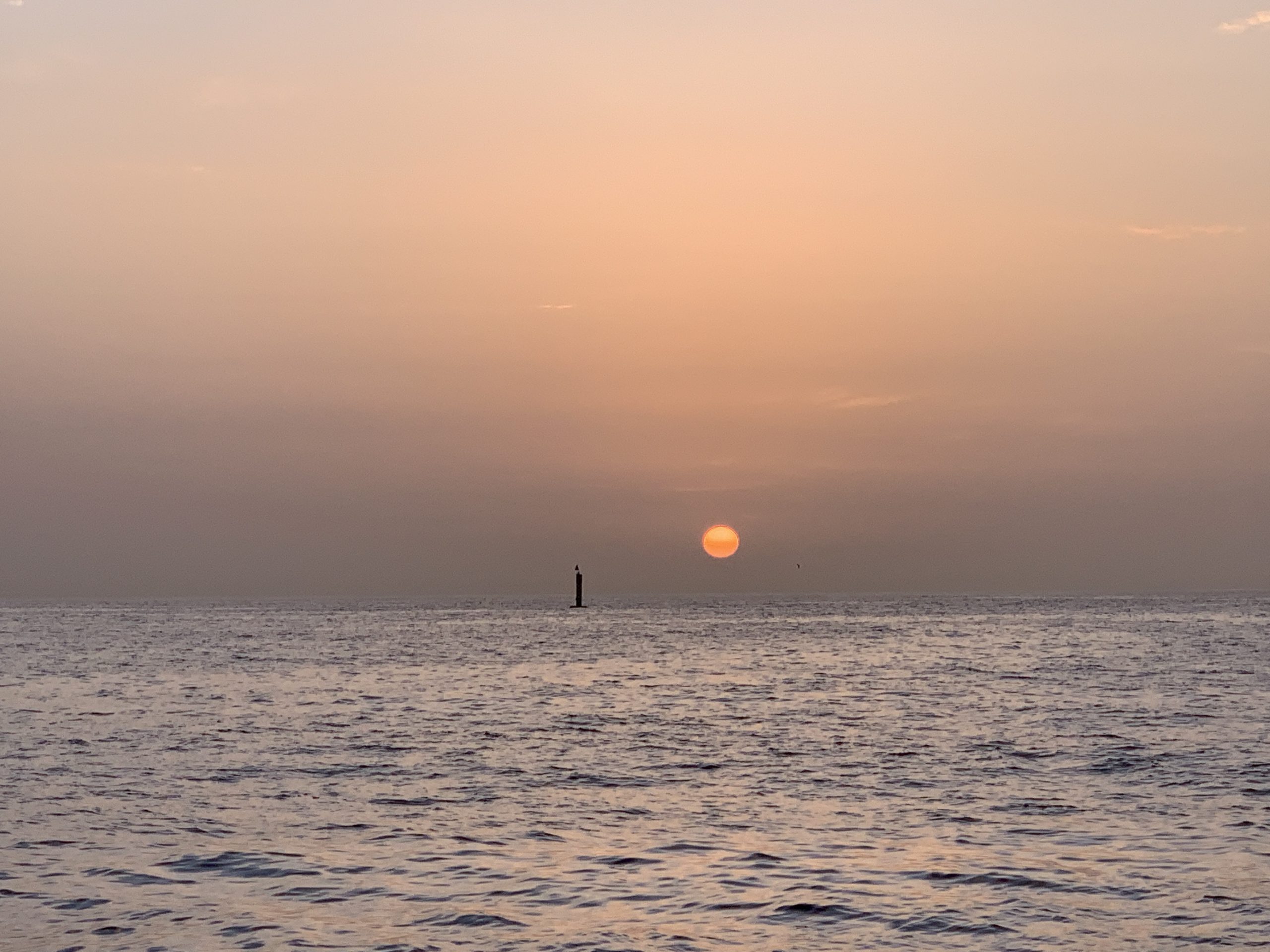
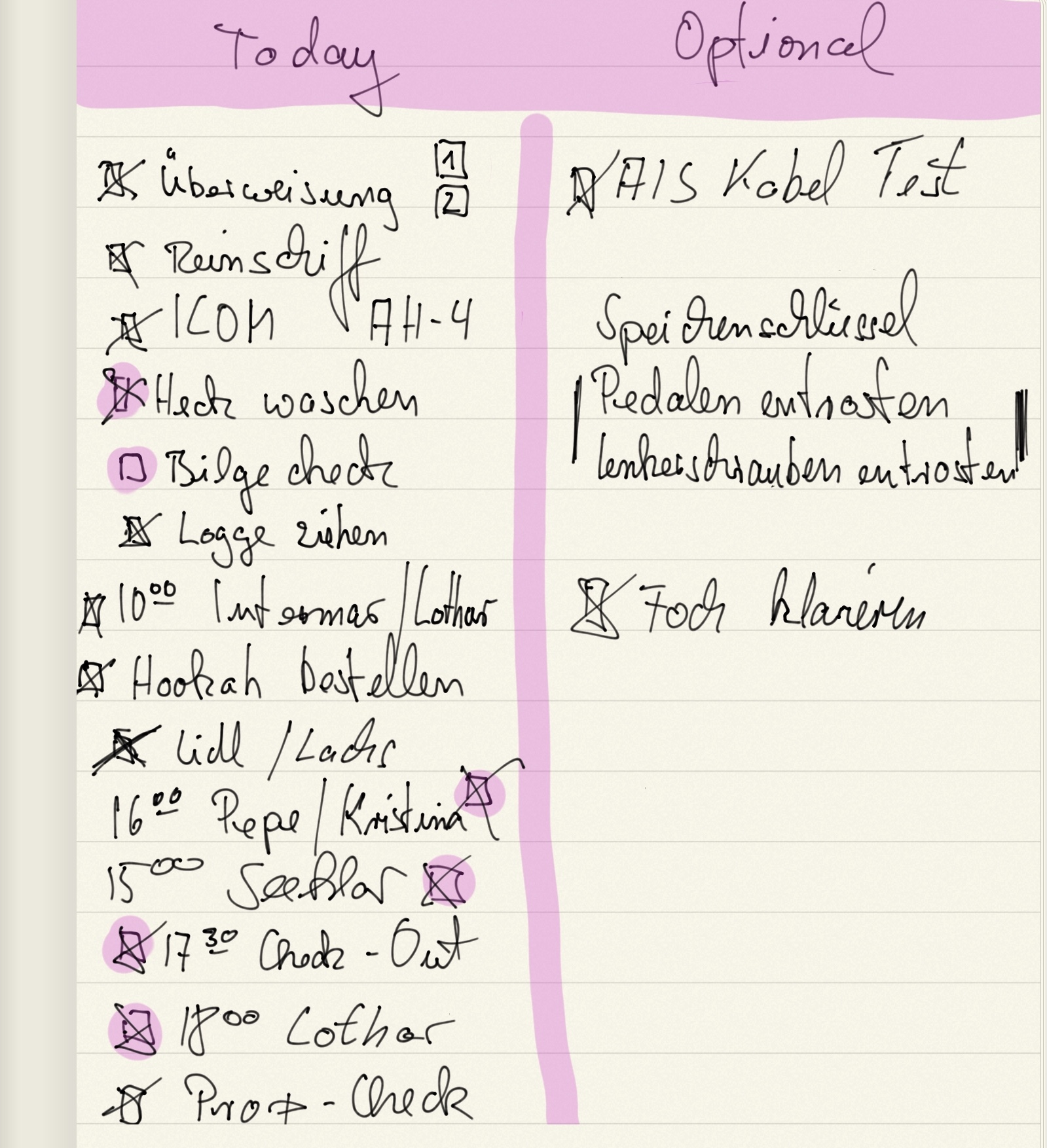
Anyway, following a warm welcome with Jutta and Willi over a cold “Einlaufbier” my busy schedule included the engine oil change upon arrival and its completion before sunset. It was tight and cleaning the mess needs to wait until tomorrow.
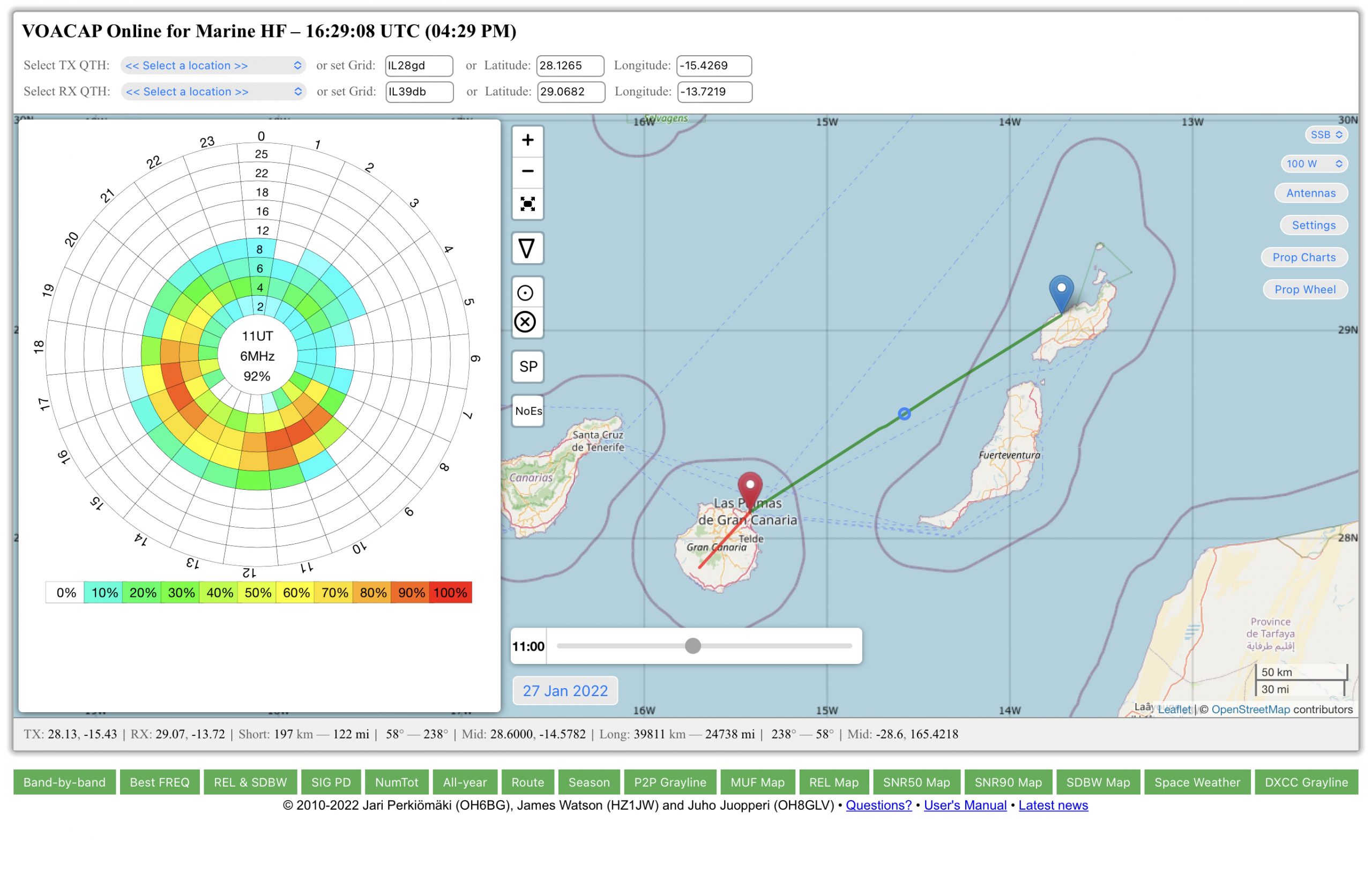
Following the Intermar e.V. morning net yesterday, Uwe/DF5AM, Lothar/EA8DES and myself agreed for a test connection from Gran Canaria to Lanzarote. Silvia/DM1SIL also joined from the south of Fuerteventura.
I did run the calculation with VOACAP and a snapshot of the results can be seen in the picture below. It basically provides you with the best frequency to be used at a given date/time for the distance you want to cover. We agreed to try 7195kHz as we had a high probability that this should work.
It worked in one direction. Both Silvia and Uwe could hear me very well with a strong signal but vice versa was just noise and I could not hear anything.
This result is not a surprise as experience shows that receiving while at berth in a crowded marina is hard. There are too many sailing masts absorbing the incoming signal. We agreed to run another test at the time we are out on the ocean again.
As a HAM radio operator on High Frequencies (HF = 3 – 30MHz) you depend on these external factors and the challenge is to “cooperate” with the propagation conditions of electromagnetic waves influenced by many factors.
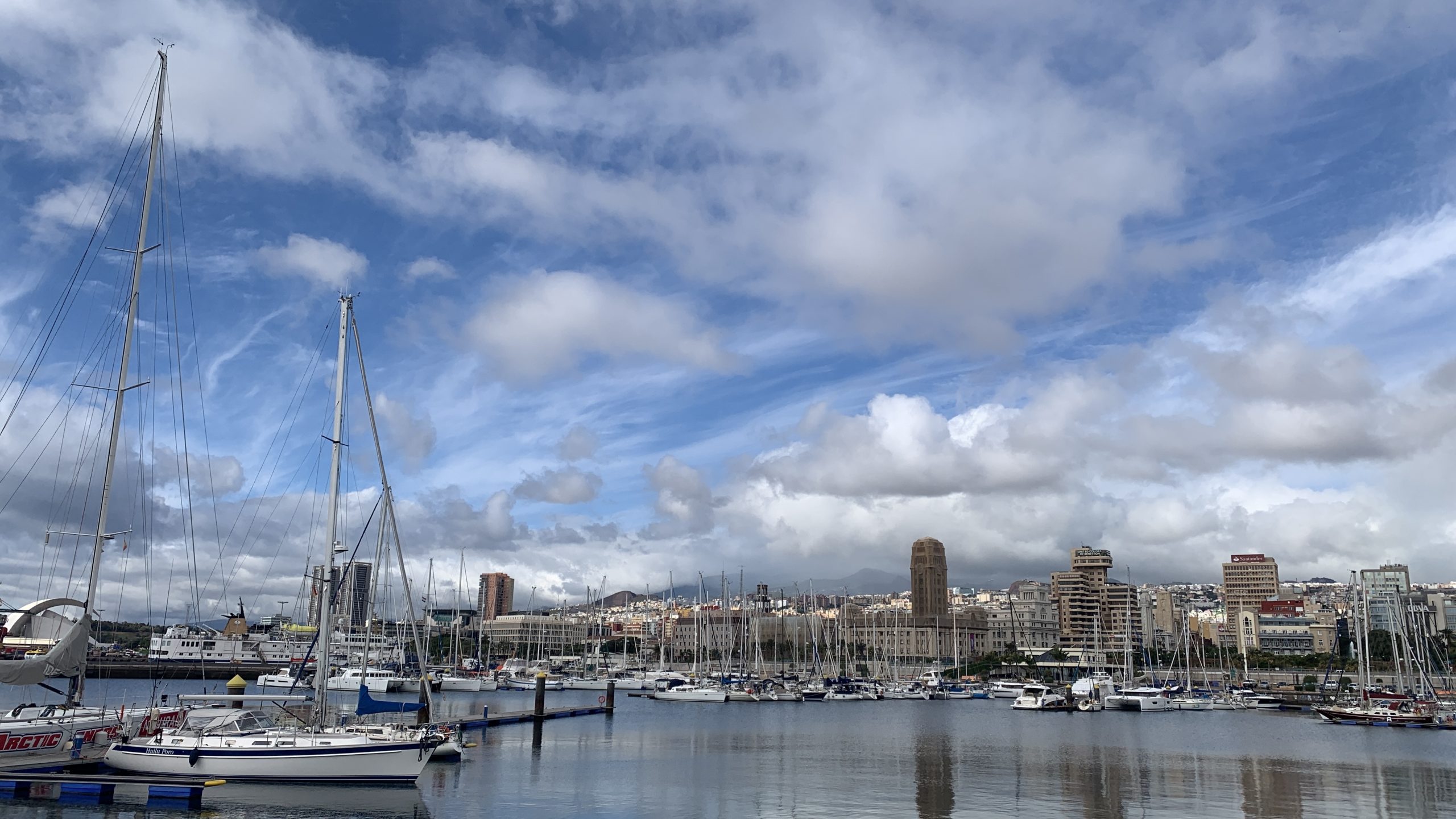
I like Las Palmas. The city is average – below average for biking – but it offers all you need and good friendship among fellow sailors as this is probably the main starting point to go West. The scenery is divers, from beach to commercial harbour, from high-rise to local fishermen, etc. 🧐 Fair winds…